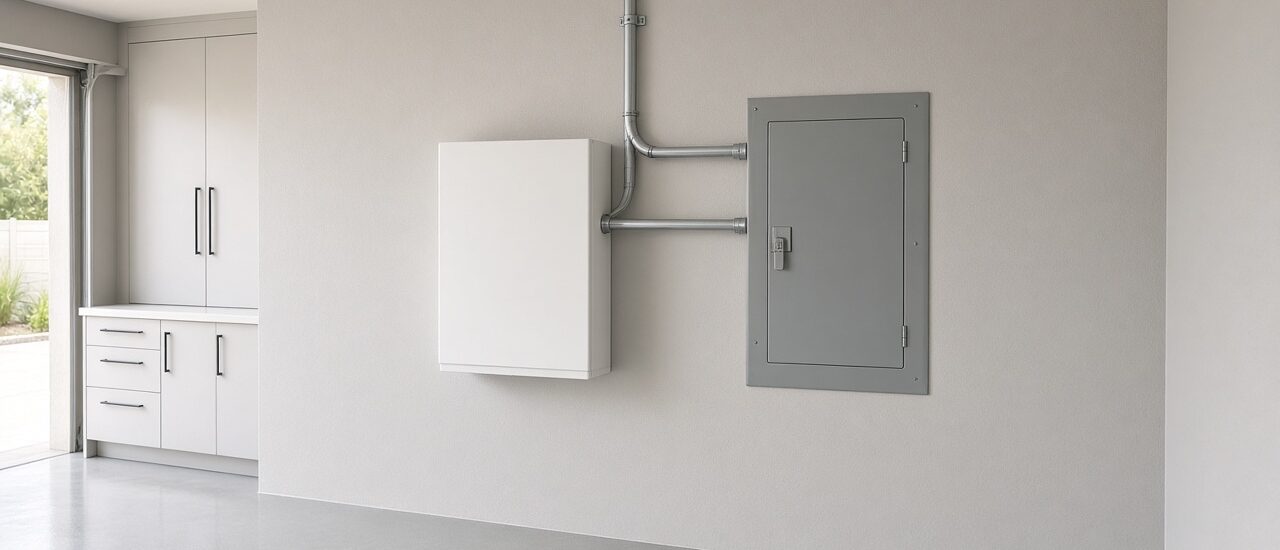
Quick Answer: For most Sacramento homes, Tesla Powerwall 3 fits best when you want whole-home backup from one unit that can start a large AC. Enphase IQ Battery 5P fits best when you want to start small, add 5 kWh at a time, and keep installer options open. Plan critical loads and panel space first, then pick the system.
When the grid drops on a 100-plus-degree evening, the real question is which circuits stay on: the fridge, Wi-Fi, lights, maybe a medical device. That is where a tesla powerwall vs enphase decision should start for Sacramento, Roseville, and Folsom homes, not with the brand ads. We size critical loads, check breaker space on your panel, then install Powerwall or Enphase storage and pull the permit. For service scope and booking, see our energy storage and battery backup in Sacramento page.
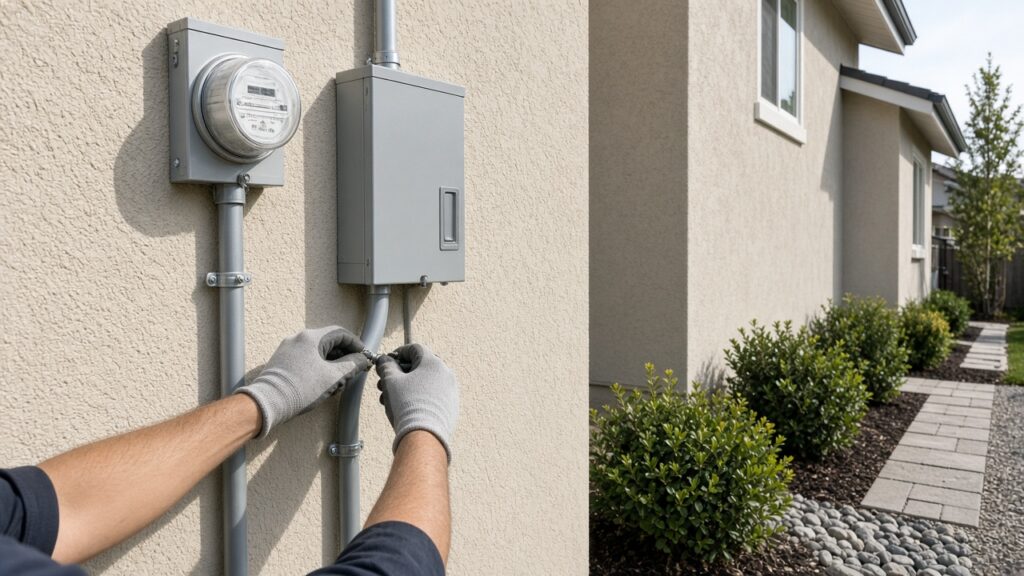
How do Powerwall 3 and Enphase IQ Battery 5P compare on size and setup?
The two systems scale in different ways. One Powerwall 3 stores 13.5 kWh and has its own hybrid inverter. One Enphase IQ Battery 5P stores 5.0 kWh, and you stack units to reach the capacity you want.
| System | Usable capacity per unit | Continuous output per unit | Warranty |
|---|---|---|---|
| Tesla Powerwall 3 | 13.5 kWh | Up to 11.5 kW | 10 years, 70% capacity retention |
| Enphase IQ Battery 5P | 5.0 kWh | 3.84 kW | 15 years or 6,000 cycles |
For a household that wants roughly 13 to 15 kWh of storage, that means one Powerwall 3 or about three Enphase 5P units. A single large unit is usually the simpler install. Enphase lets you buy in stages instead of all at once. What your written estimate looks like depends on how many units you need, how much panel work comes with them, and whether solar is already on the roof. Ask for those lines to be broken out so you can compare bids fairly.
What do SMUD and state battery programs offer right now?
Sacramento is different from most of California on solar and storage rules. SMUD is a municipal utility, not an investor-owned utility under the CPUC, so the NEM 3.0 changes that hit PG&E, SCE, and SDG&E customers do not apply the same way here. SMUD sets its own Solar and Storage Rate (SSR). Roseville Electric runs its own programs if your meter sits in Roseville. Edge addresses on PG&E follow CPUC rules. The rebate math follows the meter, not the city name on your mail.
- SMUD pays a set export rate for solar sent back to the grid on the SSR. Check the current rate on smud.org before you model payback.
- SMUD’s My Energy Optimizer Partner+ program has offered a one-time enrollment incentive for battery owners, with a deadline tied to your Permission to Operate date. Tesla, Enphase, and several other brands have qualified. Confirm the current terms and window on smud.org before you sign.
- SMUD has also run ongoing Virtual Power Plant payments for batteries that let SMUD draw stored energy during peak demand. Ask which brands are enrolled today, since eligibility has differed by brand.
- The state Self-Generation Incentive Program (SGIP) has income-qualified and general-market tiers, and funding opens and closes in steps. Check the CPUC SGIP pages for what is open at your address.
- If you installed solar before March 1, 2022 and are on a legacy SMUD net metering rate, adding a battery through a SMUD incentive program can move you onto the SSR. Run that comparison before you add storage.
Run the numbers for your own system before assuming either battery wins on incentives. Enphase modularity can help you size closer to a program cap than a single 13.5 kWh jump.
What are the real performance differences in a tesla powerwall vs enphase setup?
Specs decide most of the field work.
- Powerwall 3 stores 13.5 kWh per unit. Enphase 5P stores 5.0 kWh per unit and stacks in 5 kWh steps.
- Powerwall 3 delivers up to 11.5 kW continuous from one unit, which is enough to start a 5-ton central AC or a large heat pump. A single Enphase 5P is rated at 3.84 kW continuous, so matching that starting load usually takes several units.
- Powerwall 3 is a hybrid inverter that handles solar input, battery management, and switching in one box. Enphase uses microinverters, so the battery and solar array stay more independently serviceable.
- Powerwall 3 carries a 10-year warranty with a 70 percent capacity retention guarantee. Enphase IQ 5P carries a 15-year limited warranty that ends at 15 years or 6,000 cycles, whichever comes first.
- Enphase gear is serviced by a wide network of licensed installers, our crew included. Ask any installer how future service and expansion will work for the brand you pick.
For most Sacramento homes built between the 1960s and 1980s, the practical choice is one large unit that can carry the house through a summer evening peak, or a modular stack you grow into after you map critical loads.
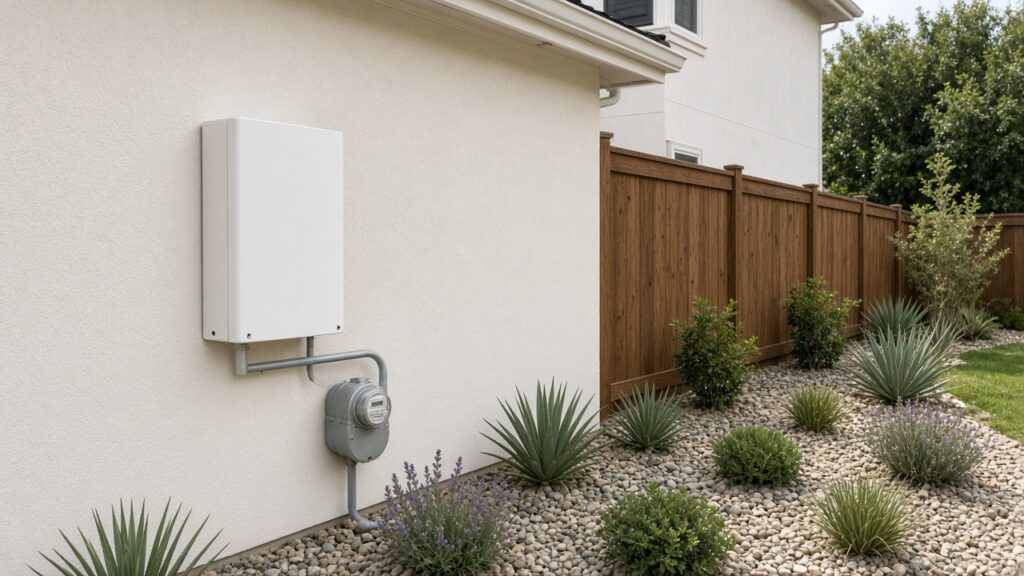
Why is battery storage more common in Sacramento homes right now?
A few local factors push Sacramento, Roseville, and Folsom owners toward storage.
Summer demand is real. Sacramento regularly sees 100-plus-degree days from June through September, and running central AC through a SMUD Time-of-Day peak window is one of the biggest bill hits. A battery lets you shift midday solar into the evening.
Backup matters too, especially in foothill-adjacent towns like Folsom and Rocklin, where wildfire-season outages come up often. Owners want the refrigerator, internet, and a few circuits without running a gas generator.
When does a home battery make sense, and when should you wait?
When it is worth it
- You already have solar and export at a low rate while buying evening peak power back at a higher one.
- You need backup for medical equipment, a home office, or a sump pump during outages.
- You plan to enroll in a SMUD battery program and can meet its enrollment window.
- Your panel and main service can support the battery’s output without a forced upgrade you are not ready for.
When it is not yet worth it
- You are on a legacy net metering rate and your export credits already cover most of your usage.
- Your roof or panel needs other work first.
- You rent, plan to move within a year or two, or your service is undersized for the battery without upgrades you will not own long enough to benefit from.
We would rather walk the loads honestly than sell a battery you do not need yet. Electrical, solar, and storage stay under one C-10 license here, so the recommendation follows your panel and usage, not a product quota.
How does battery storage work with your existing panel and solar?
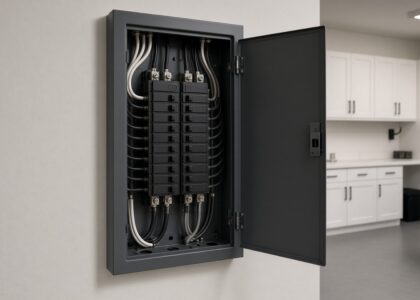
Generic comparison posts skip this part, and it is what shapes the job. Many Sacramento homes built before 1980 still run 100-amp service. Adding a Powerwall 3’s 11.5 kW output, or a stack of Enphase 5P units, to a panel already near capacity from AC, an EV charger, and household load can require a panel upgrade before battery work starts.
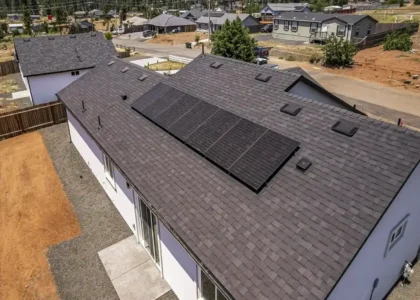
If you are adding storage to an existing solar installation, we also check inverter compatibility. Enphase batteries pair cleanly with existing Enphase microinverter arrays. Powerwall 3 can work with many existing solar systems through its hybrid inverter, but wiring and interconnection details depend on what is already on the roof. One licensed C-10 contractor for electrical, solar, and storage means one permit path instead of three companies.
Our local pages walk through backup planning in more detail: battery backup in Citrus Heights and battery backup in Roseville.
What should Sacramento homeowners check before hiring a battery installer?
- Verify the contractor’s license. Anyone installing a battery system in California should hold a current C-10 electrical license. Under the Sun Electric is CSLB #1141678. Check any license at cslb.ca.gov before you sign.
- Confirm who pulls the permit, and where. Roseville, Rocklin, Folsom, Elk Grove, and Lincoln each run their own city building department. Citrus Heights jobs more often go through the Sacramento County permit and inspection process.
- Ask about SMUD program enrollment, not just the battery. Missing an enrollment window can cost you the incentive.
- Get a clear answer on panel capacity, and whether a panel upgrade is part of the job.
- Compare warranty terms side by side. A 15-year cycle-limited warranty and a 10-year retention warranty cover different things.
Bottom Line
If you want the simplest install and whole-home backup from one unit, Tesla Powerwall 3 is usually the better fit. If you want to start smaller, grow over time, or keep future installer options open, Enphase IQ Battery 5P’s modular design and longer warranty make a strong case.
Either way, start with critical loads, panel space, and your SMUD, Roseville Electric, or PG&E rate plan. We install and service both systems across Sacramento, Roseville, Rocklin, Folsom, Elk Grove, Lincoln, Citrus Heights, and Rancho Cordova, and we will tell you which one fits before you commit.
Ready to map options for your home? Start on our energy storage Sacramento page, or call 916-899-3062. Mon-Fri 8am-6pm; Saturday 9am-4pm; Sunday closed.
Sources (plain text): SMUD Solar and Storage Rate, My Energy Optimizer Partner+, and Virtual Power Plant materials at smud.org; CPUC Self-Generation Incentive Program pages at cpuc.ca.gov; Tesla Powerwall 3 specifications at tesla.com/powerwall; Enphase IQ Battery 5P data sheet and US limited warranty at enphase.com; CSLB license lookup at cslb.ca.gov.