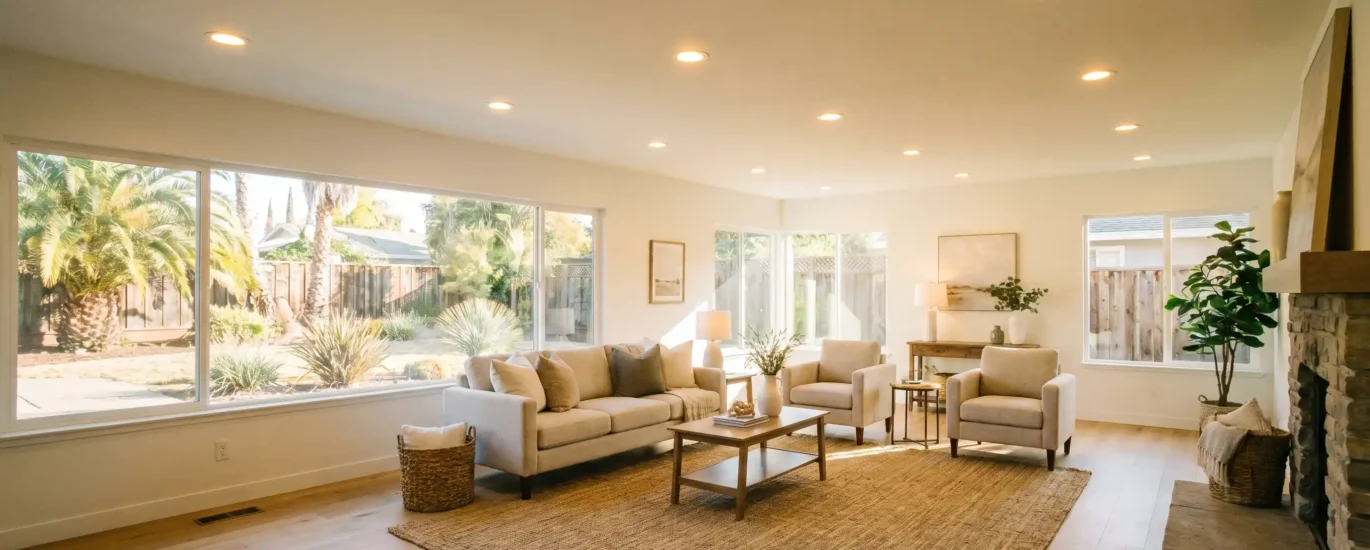
If you’re planning to add recessed lighting to your home, the first question is simple: how much will it cost?
In Sacramento, recessed lighting installation typically costs $150 to $400 per light, depending on the fixture type, ceiling access, and whether new wiring or a dedicated circuit is needed. For a standard 6-light room installation, most homeowners can expect to pay between $900 and $2,400.
The final price depends on your home, your ceiling, and your electrical system. Older Sacramento-area homes often have tighter attic access, older wiring, or limited panel capacity, which can push the cost higher.
In this guide, we’ll break down what affects the price, what different project types usually cost, and what to look for when getting a quote from a licensed electrician in Sacramento.
Recessed Lighting Cost in Sacramento at a Glance
| Project Type | Typical Cost Range | Notes |
|---|---|---|
| Single fixture replacement | $150–$300 | Existing box, simple access |
| 6-light retrofit install | $900–$2,000 | Existing home with attic access |
| 6-light install with no attic access | $1,400–$2,400 | More labor from below |
| Whole-home recessed lighting | $3,000–$7,000+ | Multiple rooms, dimmers, possible new circuits |
| New construction / open ceiling | $75–$150 per light | Lower labor cost than retrofit |
What Affects Recessed Lighting Installation Cost?
1. Number of Lights
The more lights you install, the more the project costs overall. However, the cost per light often drops on larger jobs. A 10-light project usually has a better per-fixture rate than a 2-light install.
2. Ceiling Access
This is one of the biggest cost factors.
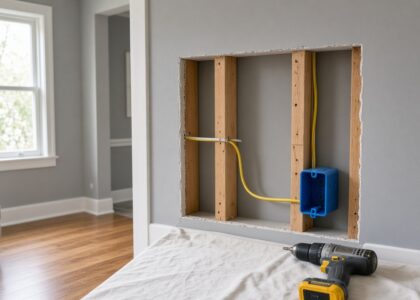
If the electrician can access the ceiling from the attic, installation is usually faster and less invasive. If there is no attic access, the work has to be done from below, which increases labor and may require extra drywall cuts.
This is common in many Sacramento and Citrus Heights homes, especially older single-story houses.
3. Existing Wiring vs. New Circuit
If the current circuit can safely handle the added load, the job stays simpler. If not, a new circuit may need to be run from the panel, which can add roughly $200 to $600 or more depending on panel location and access.
4. Fixture Type
There are two common options:
Traditional can lights
These use a recessed housing plus trim. They’re a solid choice when you have enough ceiling depth and want a classic look.
Canless wafer lights
These are thin LED fixtures that mount directly into the ceiling. They work well in tighter ceiling cavities and are often the better choice for retrofit projects with limited space.
5. Dimmer Switches
Adding dimmers improves flexibility and helps create better lighting in living rooms, kitchens, and bedrooms. Expect $50 to $150 per dimmer switch installed, depending on the setup and number of lights controlled.
6. Permits
Permits are often required when the job includes new wiring, new circuits, or more involved electrical work. Permit costs can vary by city and scope, but they are part of doing the work correctly and legally.
Sacramento-Specific Factors That Can Raise the Price
Not every home is the same, and Sacramento homes have their own patterns.
Older Homes
Many homes built from the 1960s through the 1980s may have:
- older wiring
- 100-amp panels
- limited breaker space
- tighter attic or ceiling access
Any of these can affect labor time and project cost.
Panel Capacity
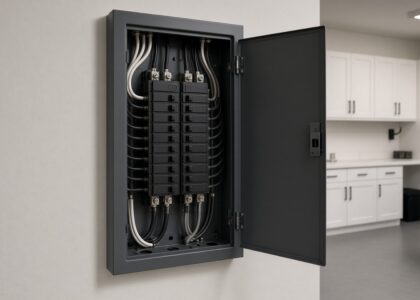
If the panel is already full or close to capacity, adding multiple recessed lights may require a panel upgrade or additional electrical work before installation can move forward.
Ceiling Construction
Certain ceiling types can make installation harder, including:
- limited attic access
- shallow framing cavities
- finished spaces above
- tile or other difficult access conditions
California Energy Code
Most modern recessed lighting projects use LED fixtures, which helps meet current energy-efficiency requirements and keeps long-term operating costs lower.
Can Lights vs. Wafer Lights
Traditional Can Lights
Traditional recessed cans are the classic option. They provide a familiar look, strong directional lighting, and more flexibility with trim styles. They usually require more ceiling depth.
Best for: kitchens, living rooms, hallways, and homes with better attic access.
Canless Wafer Lights
Wafer lights are slim, modern, and easier to install in tighter spaces. They’re often the better fit for retrofit projects where ceiling depth is limited.
Best for: remodels, low-clearance ceilings, and rooms with limited access.
For many Sacramento retrofits, wafer lights are the practical choice, while traditional cans still make sense where access is easier and a homeowner wants a more classic setup.
When Recessed Lighting Is Worth It
Recessed lighting usually makes sense when:
- you’re already remodeling a kitchen, bathroom, or living space
- you want to replace outdated ceiling fixtures
- you want cleaner, more modern lighting
- you’re preparing the home for sale
- you want better energy efficiency with LED lighting
It may make less sense when the home needs a panel upgrade first or when ceiling access makes the installation unusually invasive.
Common Questions About Recessed Lighting in Sacramento
Do I need a permit for recessed lighting?
Sometimes. Simple fixture replacements may not require one, but new wiring or a new circuit usually does. A licensed electrician can tell you what applies to your project.
How many recessed lights do I need?
It depends on the room size, ceiling height, and how the room is used. As a rough rule, a standard living room often needs 6 to 8 lights, but layout matters more than a generic formula.
How long does installation take?
A standard 6-light install can often be completed in one day, especially with attic access. More complex projects may take longer.
Can I install recessed lighting myself?
It is possible in some cases, but recessed lighting in an existing home often requires cutting openings, fishing wire, making safe electrical connections, and ensuring code compliance. Most homeowners are better off hiring a licensed electrician.
How to Get an Accurate Quote
The fastest way to get a real number is an on-site estimate. A phone quote can only go so far because the final price depends on:
- attic or ceiling access
- distance from the panel
- available circuit capacity
- fixture type
- number of lights
- whether dimmers or new circuits are needed
Before the estimate, it helps to know:
- which room you want to update
- roughly how many lights you want
- whether you want can lights or wafer lights
- whether you want dimmers installed
Bottom Line
For most Sacramento homeowners, recessed lighting installation costs $150 to $300 per light for a standard retrofit, with more complex jobs reaching $400 per light. A typical 6-light room project often falls between $900 and $2,400, depending on access, wiring, and fixture choice.
The smartest move is to get a quote from a licensed electrician who will look at your ceiling access, panel capacity, and wiring before giving you a price.
If you’re planning a recessed lighting project in Sacramento, Citrus Heights, Fair Oaks, Folsom, or Rancho Cordova, getting the layout and electrical side right from the start will save you money and problems later.
Call or text 916-899-3062 to request a free recessed lighting estimate.