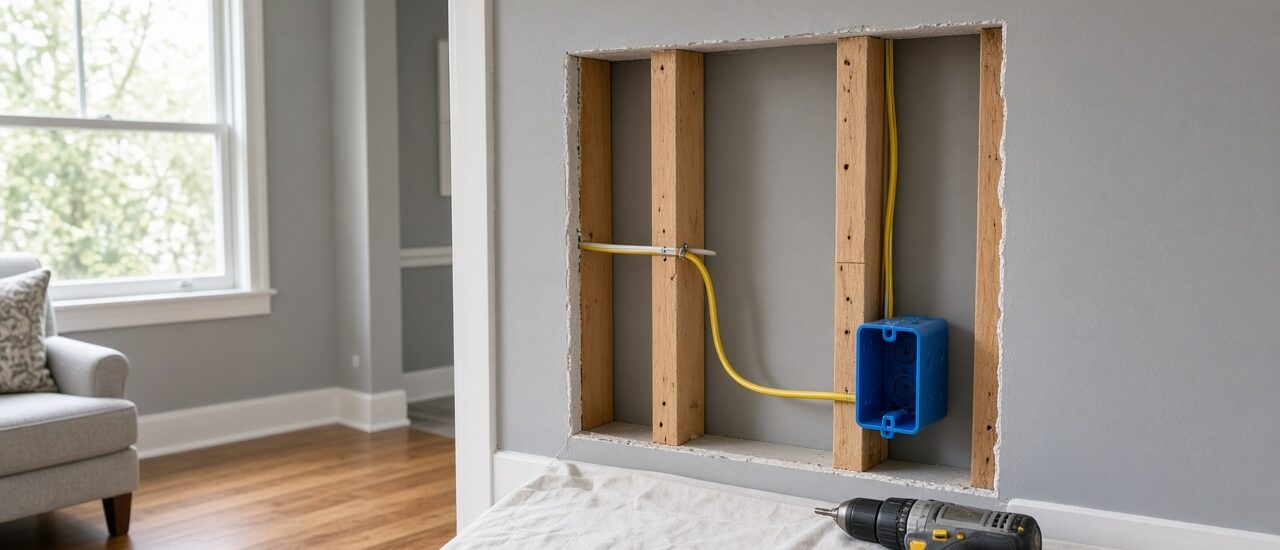
Quick Answer: Whole-house rewiring cost in Sacramento depends mostly on the size of the home, how easy it is to reach the walls and ceilings, whether the panel needs an upgrade at the same time, and how much patching follows. Labor is usually the largest part. A typical full rewire takes about one to two weeks of working days, with a permit from your city or county.
Already know the house needs new wiring? Start with our Sacramento whole-house rewiring service. A licensed C-10 electrician walks the house and pulls the permit.
If you searched whole house rewiring cost sacramento, you probably want to know what pushes a quote up or down before anyone opens a wall. Older homes in Land Park, Curtis Park, Tahoe Park, and older Carmichael or Citrus Heights pockets still carry cloth-wrapped, knob-and-tube, or aluminum branch wiring that was never meant for today’s loads. Below are the factors that shape a rewire estimate, the signs that separate a full rewire from a repair, and what the week of work looks like. For remodel-scale electrical planning, start on our electrical remodeling in Sacramento page.
What drives whole house rewiring cost in Sacramento?
No honest electrician can price a rewire from a phone call. Someone has to walk the house, open the panel, and look in the attic and crawlspace. These are the things that move the number most.
| Cost factor | Pushes cost down | Pushes cost up |
|---|---|---|
| Home size and circuit count | Smaller home, fewer rooms | Larger home, more kitchens, baths, and dedicated circuits |
| Wall and ceiling access | Open attic, raised foundation with a crawlspace | Slab foundation, finished ceilings, plaster and lath walls |
| Scope | Partial rewire of a few rooms | Full house, every branch circuit replaced |
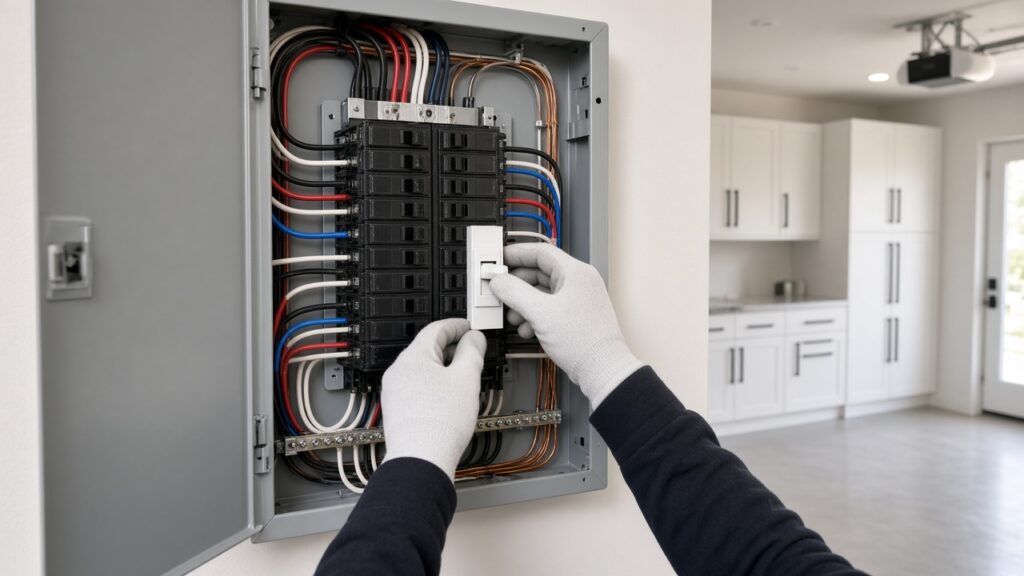
| Panel and service | Existing panel has room and capacity | Fuse box or 100-amp panel that needs an upgrade |
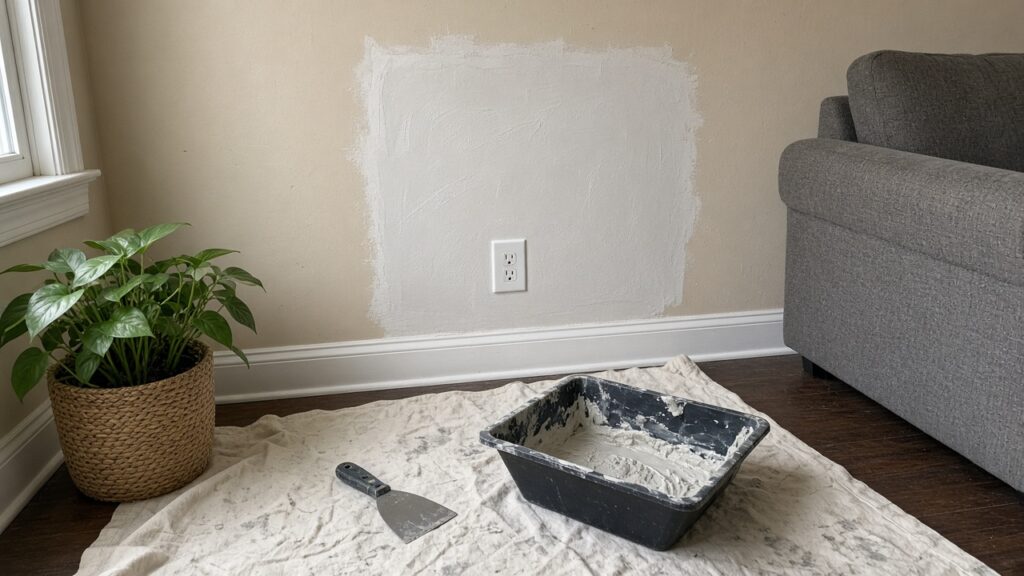
| Patching and finish | You handle paint, few openings | Extensive drywall or plaster repair |
| Permits and corrections | Clean, permitted history | Unpermitted past work that has to be corrected |
Labor is usually the biggest part of the bill. Someone is physically fishing new copper through walls, floors, and ceilings, and older homes fight back at every turn. Copper prices move too, so ask that material and labor be shown as separate lines on your written estimate.
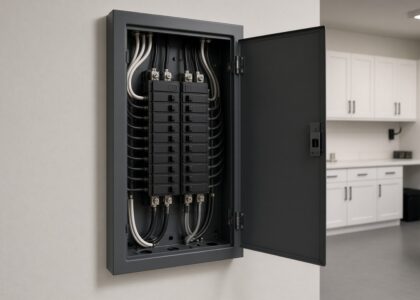
If the home still runs a 100-amp panel or an old fuse box, a rewire is the natural moment to handle that too. Doing both at once usually avoids paying for a second round of access and inspection later. For panel planning on its own, see our electrical panel upgrade cost in Sacramento post.
What signs mean a Sacramento home needs a full rewire?
Not every old house needs a full rewire, and we are not going to pretend otherwise. Some homes just need a few circuits refreshed. Before you plan for a big job, separate everyday warning signs from the wiring types that usually force a bigger scope.
Everyday signs you can notice yourself: lights that flicker or dim when an appliance kicks on, breakers that trip for no clear reason, outlets or switch plates that feel warm, a faint buzzing behind the wall, any smell of hot plastic, and two-prong outlets throughout the house, which usually mean there is no ground.
Inside the walls, these are the strong signals that a full rewire or a large partial is on the table:
- Knob-and-tube wiring is common in Sacramento homes built before the 1950s. It has ceramic knobs and tubes, single wires, and no ground.
- Aluminum branch wiring was widely installed in the 1960s and 1970s. Over decades it expands, contracts, and oxidizes, which loosens connections at outlets and switches.
- Cloth-insulated wiring has a fabric wrap that turns brittle with age and heat. It is a classic find in mid-century Sacramento homes.
- A fuse box instead of breakers is not automatically unsafe, but it usually means the whole system predates modern demand.
If you are seeing the everyday symptoms and do not know how deep it goes, start with a diagnosis. Sometimes a targeted repair buys you years. See electrical troubleshooting in Sacramento when you want answers before you commit to new copper everywhere.
Why do older Sacramento neighborhoods need rewiring more often?
Sacramento has a deep stock of homes built from the 1940s through the 1970s across Land Park, Curtis Park, Tahoe Park, and older parts of Carmichael and Citrus Heights. Many still carry original wiring, or a patchwork from decades of additions.
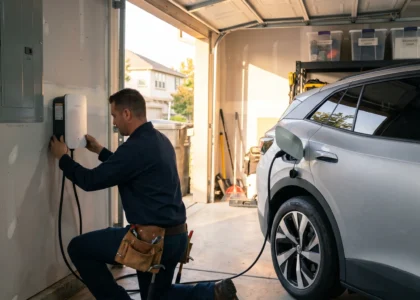
Two local realities push these homes toward a rewire. The first is heat. Summers routinely pass 100 degrees, and central AC pulls hard on a system designed when a window unit was a luxury. Aging wiring runs hotter under that load, and heat is what turns old insulation brittle. The second is demand. The house that once ran a radio and a few lamps now runs a home office, a heat pump, a kitchen full of appliances, and often an EV charger.
Utility territory matters for the loads you add later, even though the rewire itself is a code and safety job. Most City of Sacramento addresses are on SMUD. Roseville is on Roseville Electric. Some edge addresses are PG&E. The new copper and grounding have to meet current code either way.
There is also a paperwork angle that catches owners at resale. Older homes often contain unpermitted electrical work from a previous owner, like a sub-panel here or a DIY circuit there. That work tends to surface during an inspection, and a rewire is often the clean way to close it out. For local permit detail, see our guide on electrical permits in Sacramento.
How long does a whole-house rewire take, and can you stay home?
People picture the house torn open for a month. It is usually less dramatic. A whole-house rewire on a typical 1,500 to 2,000 square foot Sacramento home generally takes five to ten working days. Smaller homes or partial jobs often wrap in one to three.
We start with a walkthrough and a plan, then pull the permit through your jurisdiction: City of Sacramento, Sacramento County, City of Folsom, or another city building department depending on the address. Citrus Heights jobs more often go through the Sacramento County permit and inspection process. Most of the work is the rough-in, which means new copper to outlets, switches, and fixtures, plus proper grounding. Some walls do open. We open as few as possible and cut cleanly where we must.
Most homeowners do not have to move out. We usually work room by room and restore power to livable parts of the house at the end of each day. Expect some dust and noise, and a few stretches with the power off while we make connections. After the new wiring passes inspection, we patch and the house goes quiet again.
When is a full rewire worth it versus a targeted repair?
A full rewire is worth it when the branch wiring itself is the problem: knob-and-tube, aluminum, crumbling cloth, missing grounds house-wide, or a fuse-era layout that cannot safely carry modern loads even after a panel swap. It is also the clean answer when unsafe splices and unpermitted past work show up all over the house.
A targeted repair or partial refresh is often enough when one circuit is bad, one room was remodeled poorly, or the symptoms trace to a single failed connection or device. That is a repair, not a whole-house copper job, and we will say so if that is what we find.
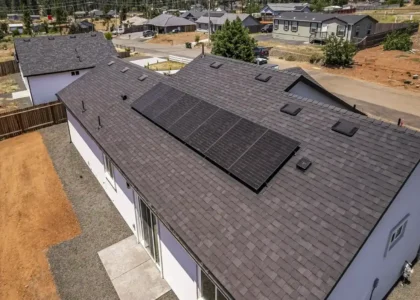
If you are planning an addition, a kitchen or bath remodel, or future EV, solar, or battery work, a rewire (or a large partial while walls are open) is the time to run modern circuits once. Doing power work twice because the first pass was temporary is how budgets get away from people. Our residential electrical contractor team looks at the whole house, not just the wire in front of us.
What should you check before hiring a rewiring electrician in Sacramento?
- Verify a current C-10 electrical license. Under the Sun Electric is CSLB #1141678. Check any license free at cslb.ca.gov before you sign.
- Confirm who pulls the permit and which jurisdiction covers your address. A crew that cannot name it is a red flag.
- Ask for a written scope that separates full rewire, partial rewire, and panel work. If part of the wiring is fine, the estimate should say so.
- Ask how grounding and GFCI or AFCI protection will be handled where code requires them, and who is responsible for patching wall openings.
- Compare bids on the same scope. Two quotes are only comparable when they cover the same circuits, panel work, and patching.
Rewiring without a permit can stall a home sale and complicate an insurance claim. It is not a corner worth cutting.
Bottom Line
The cost of rewiring an older Sacramento home comes down to its size, how hard the walls and ceilings are to reach, whether the panel comes along, and how much patching follows. Expect roughly one to two weeks of working days for a full job. A rewire becomes necessary when knob-and-tube, aluminum, or crumbling cloth wiring, or house-wide flicker and warm outlets, stop being quirks and start being warnings. If you are not sure which situation you are in, a site visit will tell you.
Ready for a straight read on your house? Start on our electrical remodeling Sacramento page, or call 916-899-3062. Mon-Fri 8am-6pm; Saturday 9am-4pm; Sunday closed.
Sources (plain text): California Contractors State License Board license lookup at cslb.ca.gov; City of Sacramento, Sacramento County, and City of Folsom building permit materials for electrical work; SMUD and PG&E service-territory maps.